Amazing Animal of the Week – the California Condor

Once you see a California Condor in flight, I bet you’ll agree with me that this majestic bird should be the amazing animal of the week every week.

You probably noticed that the condor doesn’t flap its wings much except to take off from the ground. They have proportionally small sternums which means that most of their flight is gliding and soaring rather than flapping. The California condor is the largest North American land bird, weighing up to 26 pounds with a 9.8 foot wingspan! They are bald headed with black feathers with patches of white and are among the longest living birds in the world with a lifespan of up to 60 years.

Condors live in coniferous forests and nest in cliffs or large trees. They lack a syrinx which is the vocal organ of birds which means the only sounds they make are grunts and hisses. These sounds help them establish the social hierarchy in their groups and allows the dominant birds to eat first. File:California-condor-gymnogyps-californianus-078 (21196759264).jpg

Male condors woo females by turning their heads red and puffing out their neck feathers while slowly spreading his wings and approaching the female. If she lowers her head, they mate for life. Their eggs are bluish white and a female lays one egg every other year in late winter or early spring. Both parents will help incubate the egg which hatches after about 2 months. Chicks can fly when they are about 6 months old.

Condors are scavengers which actually contributes to their death. Carrion sometimes contain lead from exploding ammunition. This poisons the condors when they eat them. Condors can also be poisoned by eating carrion which  contain microtrash, small pieces of garbage which make their way up the food chain.

This amazing animal became extinct in the wild in 1987 when all remaining individuals were captured to begin a captive breeding program which was successful in releasing condors back into the wild 10 years later and a hatchling occurring in the wild 18 years later.


Previous Amazing Animals of the Week: The Banana Slug

Image is licensed under the Creative Commons Attribution-Share Alike 2.0 Generic license.

Remote Labs

Your students need to do labs. It’s not only the most fun part of science, it’s also the part that helps students to understand and remember concepts they’ve been taught. Remote labs include two types of activities – virtual labs and labs that students can do at home using household equipment.

Remote school presents unique challenges to every discipline. I’ve heard my art teacher friends lamenting their students’ inability to obtain supplies. PE teachers have a tough time motivating students to work out from home. And science teachers are no exception. The best part of science class is, for me and for my students, the labs. COVID has made hands on activities impossible – our school is hybrid so many of my students are learning from home, and sharing materials is discouraged because of the possibility of contamination. Like every other teacher, we’ve had to learn, through trial and error, the best ways to engage our students and simulate hands on activities without increasing the possibility of spreading a virus.

How do middle school science teachers incorporate labs in a virtual classroom?

PhET Interactive Simulations – PhET is a collection of free, open source, interactive science and math virtual labs that students can use remotely and independently. The simulations use Java and Flash and can be run online or downloaded to your computer.

Some PhET simulations you can use tomorrow:

Flinn At Home Labs – Free video based remote labs exploring scientific concepts using materials students have in their own homes.

My favorite Flinn at home labs:

Steve Spangler Science – A nearly bottomless collection of remote labs that can be done with materials your students have in their homes.

My favorite Steve Spangler labs:Food, Candy, Sugar, Rock Candy, Rock Sugar, Crystals

Science Bob – Dozens of remote labs and at home experiments that make science fun and accessible.

My favorite Science Bob labs:

  • Lava in a cup – Make a lava lamp without the electricity. I use this for solubility and density.
  • Plastic Milk – learn about casein and denaturing protein.
  • Blow up a balloon with yeast – Good for characteristics of life, watch as yeast ferment sugar and produce carbon dioxide which collects in the balloon, slowly. This isn’t a dramatic experiment but rather a wait and see experiment.


What have you been doing in your science classes to help students do labs at home?

Subscribe

* indicates required


/

( mm / dd )


Amazing Animal of the Week – the Banana Slug

In the course of updating my virtual tour product line, I was reminded of some amazing animals so I’d like to present to you the Amazing Animal of the Week! Today’s animal is the banana slug which is amazing for many reasons.File:Banana slug at UCSC.jpg

Banana slugs are native to the dense, moist forest floors of California’s redwood forest and are the second largest species of land slung in the world. They can grow up to almost 10 inches long and are yellow, which explains the name. They move at an astonishing 6.5 inches per minute and secrete a thick slime that helps keep them from drying out. The slime also provides a slippery layer for them to ooze on. The slime also has some protective qualities – it tastes bad and makes any would-be predator’s tongue go numb for a while which might result in the predator spitting them out. As a consequence, some predators like raccoons, ducks and geese have evolved the neat trick of rolling the slugs in the dirt for a while to get the slime off. The slime leaves a signature smell for other slugs to find them, possibly even to mate.

Banana slugs have one lung, one food, and are invertebrates. They have tentacles with light sensors on the top of their heads as well as smaller tentacles in the front of their face which can feel and smell. Tentacles will grow back if one is lost to an accident or predator. Banana slugs are are decomposers and eat dead organic matter including leaves, plants, animal feces, moss, and mushrooms and recycle them into nutrient dense waste which fertilizes healthy soil. 

Check out this amazing animal of the week here:


Banana slug image is licensed under the Creative Commons Attribution 2.0 Generic license.


Subscribe

* indicates required


/

( mm / dd )


How do Presidents impact science?

Presidents Day is an important day to remember the great achievements and contributions that our Presidents have made. Do Presidents have any impact on science?

George Washington

File:Edward Savage, George Washington, c. 1796, NGA 46007.jpg


George Washington, along with Thomas Paine, conducted a famous experiment in 1783 which proved that marsh gas was flammable. While this is, arguably, not a terribly impactful study today, it does cement Washington as a critical thinker and a person with a scientific mind, one that could analyze and deduce.

Abraham Lincoln

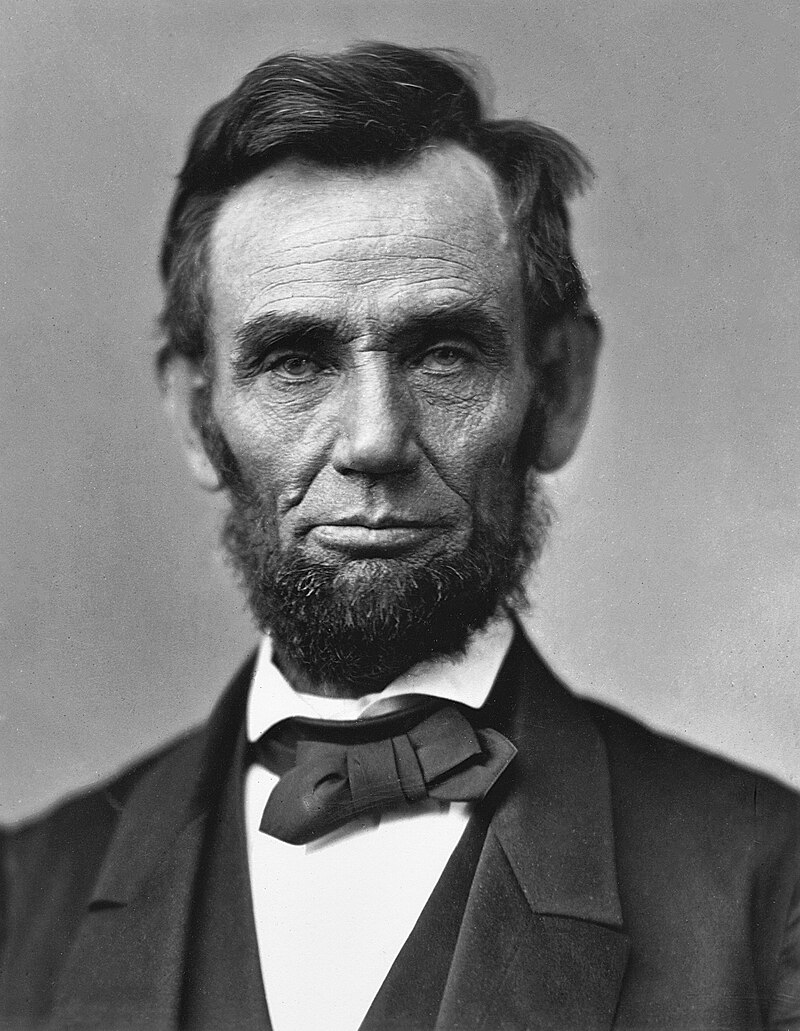
An iconic photograph of a bearded Abraham Lincoln showing his head and shoulders.


160 years ago, President Abraham Lincoln brought science to the United States government. He signed the Morrill Act

in 1862 which revolutionized higher education by creating a system of land grant college and universities such as MIT, Cornell, and Ohio State U. Lincoln also founded the National Academy of Sciences which advices the President and Congress on science and technology matters. Lincoln is also the only United States President to date to hold a patent. He invented a device that lifted boats over shoals.

Benjamin Harrison

Benjamin Harrison, head and shoulders bw photo, 1896.jpg

President Benjamin Harrison was a wilderness champion, establishing the Grand Canyon National Park. President Grover Cleveland signed into law protection for the animals of Yellowstone National Park.


Teddy Roosevelt

President Roosevelt - Pach Bros.jpg

In the early 1900s, President Theodore Roosevelt established 5 new national parks. Roosevelt is often called the Conservation President because he wanted to ensure the protection of 150 million acres of forest land. Roosevelt created a 51 Federal Bird Reserves which became national wildlife refuges. The Roosevelt Elk, famous in the Redwood National Park, is named for him. The Roosevelt Arch in Yellowstone National Park is named for him also.

Franklin Delano Roosevelt

FDR 1944 Color Portrait.jpg


President Franklin D. Roosevelt was integral in the development of the Hoover Dam, controlling the Colorado River and providing hydroelectric power to  1.3 million homes in Los Angeles, Las Vegas, and Phoenix.


John F. Kennedy

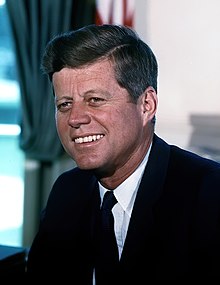
John F. Kennedy, White House color photo portrait.jpg

President John F. Kennedy famously set the national goal of landing a man on the Moon in 1963, launching a wave of technology and exploration for the next 50+ years.


Which President did I leave off my list that you would have added?


Photo Credits:

Photo of Washington – This file is made available under the Creative Commons CC0 1.0 Universal Public Domain Dedication.

Photo of Lincoln – This work is in the public domain in the United States because it was published (or registered with the U.S. Copyright Office) before January 1, 1926.

Photos of Harrison and T. Roosevelt – These media files are in the public domain in the United States. This applies to U.S. works where the copyright has expired, often because its first publication occurred prior to January 1, 1926, and if not then due to lack of notice or renewal. See this page for further explanation.

Photo of F. Roosevelt – This file is licensed under the Creative Commons Attribution 2.0 Generic license.

Photo of Kennedy – This file is a work of an employee of the Executive Office of the President of the United States, taken or made as part of that person’s official duties. As a work of the U.S. federal government, it is in the public domain.


Are you Married to a Teacher? Take this quiz.

This post is dedicated to all of those brave souls who are married to a teacher. To all those supportive, patient, and thoughtful partners who provide the backbone to hold us up and the rock on which we stand.

If you think you might be married to a teacher, take this quiz and find out.

Give yourself one point for each item you’ve done in the past 12 months, 2 points if you’ve done it more than once:

  • Cut out bulletin board decorations, pre- or post-lamination.
  • Learned a little something about algebra or cell division while your spouse was remote teaching.
  • Observed your spouse get recognized by a student or student’s parent in the grocery store. Extra points if he or she stopped to chat.
  • Listened supportively while your partner vented about a student, a parent, or an administrator.
  • Been shocked at the speed your partner gulps coffee.
  • Given up your dining room table so your partner could spread out his or her home “classroom.”
  • Poured wine for your partner while listening to him or her on the phone with a parent at 6:00 on a Friday night.
  • Lost an argument about who had the more difficult day.
  • Learned that your spouse spent money on kids that aren’t yours.
  • Saved toilet paper rolls, bottle caps, cereal boxes, or other detritus for a project.
  • Woken up on a Saturday at 6am to the clicking of computer keys.
  • Netflix and chilled with your partner while he or she was grading papers.
  • Driven to the craft store, teacher supply store, grocery store, or Target for something urgent and last minute that was essential to tomorrow’s lesson
  • Added school supplies to your grocery list.
  • Cheered for a high school football/lacrosse/baseball/volleyball/hockey team your children don’t attend.
  • Watched your spouse dress for a prom you weren’t going to.
  • Tried to have a romantic dinner and have your partner spend the entire time either working or talking about work.
  • Tripped over a pile of things your partner needs for school tomorrow.
  • Opened your trunk and found white boards, bulletin board paper, and a case of wine.
  • Been amazed by how much love your spouse is capable of giving to his or her students.
  • Been at an event and watched your spouse become instant best friends with a stranger who also happens to be a teacher.

Scoring your quiz:

0-4 points – Your spouse is probably doing more of these things than you realize. Pay attention.

5-15 points – You are an important support person for someone who is doing one of the most important jobs in the world. The entire community salutes you and thanks you for your service.

16-20 points – Welcome to the teacher spouse  club. The rewards are plenty. It almost feels like a cult, doesn’t it?

21 or more – I know my spouse scored more than 21 points. Actually, I’m not sure my spouse had time to take this quiz because he’s cutting out bulletin board decorations for me right now. I love you, Darling.

Fall In Love with Science Teaching Again

I love what I do.

Not every minutes, and sometimes not even every day. But I love what I do.

Here are some of my favorite reasons to fall in love with science teaching today:

That moment when the kids say “Ooooh, I get it!”

The kid who says “This is my favorite class!”

Everybody thinks you’re really smart.

You can be as wacky as you want and no one bats an eye.

That moment when someone says something ridiculous and a student counters with “Wait, do you have any evidence for that?’

What are your favorite things about being a science teacher?

Plate Tectonics Unit Plan

Earthquakes and volcanoes are naturally fascinating and you won’t have any trouble getting students curious about how they occur. You can teach plate tectonics in a low to no prep way and still help build fundamental scientific literacy skills in your students. These are my plate tectonics lesson plans.

When to teach plate tectonics

Plate tectonics is a unit that cycles back into the NGSS curriculum several times – at least twice in elementary school, once in middle school, and again in high school. In middle school, students are expected to be able to use data about fossils, rocks, continental shapes, and seafloor structures as evidence of tectonic plate movement. Logically, this unit fits after relative and absolute dating so students are equipped with the background knowledge they need to understand the evidence of plate tectonics.

Scope and Sequence

All good NGSS lessons include phenomena, inquiry, and discovery.

  1. Start with a map exploration. Given a map of the world, let your students practice map skills and plot the locations of major earthquakes and volcanoes. Let them wonder why these geologic events are clustered in certain areas.
  2. Introduce the concept of Pangaea. Let students know about Alfred Wegener and the evidence that he thought supported his theory of plate tectonics. I do this with an Interactive drag and drop slide show. Let students cut out the continents and try to recreate Pangaea. Have them compare their Pangaea maps with the maps of earthquakes and volcanoes they created and see if they make any connections. We’ll circle back to that map later, but it’s always a good idea to revisit phenomena throughout your unit.
  3. Tell students that Wegener’s theory wasn’t accepted at first. Critics complained that they couldn’t actually see the movement of the continents and offered alternate explanations of the positions of mountain ranges, fossils, and climate features. I like to let students struggle with this for a while – I tell them that critics hypothesized about land bridges spanning the Atlantic Ocean and let them wonder how to prove or disprove something.
  4. Submarine technology made the difference in the acceptance of the theory of plate tectonics. The discovery of the mid-ocean ridge and the ages of rocks on the seafloor made it impossible to ignore Wegener’s theory any more. My plate tectonics lesson plans include the same Interactive drag and drop slide show.
  5. By this point, students are ready to know how plates move. I do a convection currents lab. If your students already know the layers of the earth, they will understand that the lithosphere floats on the asthenosphere. If you model the lithosphere with pieces of sponges, you can float them in water. In class, I put the sponges in a pan of water in a glass baking dish – my lasagna dish works best. I lift the lasagna dish on books so that there is space under it for a can of Sterno. When the Sterno is lit, the water will heat unevenly and the sponges will float away from each other. Even students working asynchronously can complete this lab activity with parental supervision, or you can videotape yourself doing the demonstration.
  6. Another hands on lab activity that’s great to add to your plate tectonics lesson plans is a cake frosting exploration. By now, students know that the lithosphere is broken in to pieces that move on the asthenosphere. If you model the lithosphere with 2 Rice Krispy treats, students can slide the treats on the frosting and explore the three ways that tectonic plates can interact – convergence, divergence, and shearing. Sub one of the Rice Krispy  treats for a graham cracker to model an oceanic plate and students will be able to observe subduction.
  7. Now’s a good time to circle back to the map activity you did at the beginning of your plate tectonics unit. Allow students to make connections between what they observed in the map activity and what they know now.
  8. Practice vocabulary with a magic picture and with Boom cards.

Standards Addressed in this unit:

NGSS MS-ESS2-3 – Analyze and interpret data on the distribution of fossils and rocks, continental shapes, and seafloor structures to provide evidence of the past plate motions.


Subscribe

* indicates required


/

( mm / dd )


Free Stuff for Science Teachers!

Who doesn’t love free stuff?

Here’s a roundup of all of the great free stuff for teachers this February!

Savings for Teachers:

Subscribe

* indicates required


/

( mm / dd )


Tuesday Tech – How can Teachers can use Google Forms

Keeping records is an integral part of being a teacher. I’m often asked “Did Janine come for extra help?” or “What contact have you had with Joe’s parents?” In the olden days, I kept notebooks and binders with long records of emails, phone calls, conferences, and so on with every parent. Students who came for extra help had to sign in to a binder with the date and content they wanted to review. This served as my resource to sift through whenever I was asked to confirm extra help or parent contact. Google forms is a simple, flexible, and readily available tool for teachers to keep track of all sorts of stuff. Now I use Google Forms to kusing google forms for teacerseep track of these things. Here’s how:

  1. Create a Google Form that includes options you want to record. For example, on the form I use for extra help, I include date, time, and content reviewed. On the form for parent contact, I include type of contact and what we discussed.
  2. Bookmark the Google forms so you can access them whenever needed.
  3. Click on the bookmark and enter the info whenever you have extra help or parent contact.
  4. When you’re asked to document your contact, use the built in Google Sheet to search for the relevant student and recall all of your information.

Easy peasy lemon squeezy.

Click these images for your own Google Forms for teachers – make a copy and add/delete anything you want!